Thursday, 9 August 2018

Quarantine (John Erick Dowdle, 2008)

Introduction
Today, the focus will be discussing on documentary film. This film genre has radically evolved over the years and therefore, it is alright to be confused in defining the term "documentary". According to the author of Documentary Storytelling, Sheila Curran Beranrd, documentaries bring audience to a new world of experience through presenting factual information about persons, places or events. However, factuality alone does not define documentaries; it is what the filmmaker does on the factual elements (Desktop Documentaries, n.d., para.1-5). Out of the many types of documentaries, mockumentary will be the main discussion for this blog.

Theory Discussion
As proposed by Bill Nichols, we can look at documentaries via the techniques applied by the filmmakers when they record or shape the event, such as the way they represent the documentary to the audience. Therefore, Bill had suggested six modes of representations which include poetic mode, expository mode, observational mode, interactive mode, reflexive mode as well as performative mode. The film Quarantine (2008) falls under performative mode's mockumentary category as well as a few of the other modes of representation. According to English Oxford Living Dictionaries, mockumentary is a film which takes the form of a serious documentary film to mock its subject (n.d.).

Synopsis
Angela Vidal and her crew cameraman Scott Percival set out to film a report on the night shift in a Los Angeles fire station (IMDb, n.d., para.4). They are introduced to Fletcher and Jake, and are allowed to shadow them in their action. A medical emergency is reported and the duo follows the firemen to the scene. Mrs. Espinoza, the source of the screaming, attacks one of the policeman and this is where the virus outburst. As the policemen, firemen and TV crews want to send the injured to the hospital, they are told that the door is locked from the outside. Their cell phones and cable connections are blocked, the rabies-infected are crazed in biting the survivors and most importantly, they are all quarantined. The video tape is the only evidence on what is going on in the building.

Analysis
The first mode of representation found in Quarantine (2008) is performative's mockumentary mode. This mode of representation uses many different techniques to film and represent the issue, using a fictional style to show the audience the documentary. It evokes mood or atmosphere found in the fiction film, and it is lack of objectivity. It aimed to encourage the audience to feel the event meanwhile encouraging them to question the accuracy of the filmed events. The film Quarantine (2008) is subjective as it is the point of view of Scott, the cameraman, following Angela, the reporter, all the way in the incident. Since it is one kind of horror film, there are many scenes which hyped up the audiences' mood to have anticipations. For example, there is one scene when Danny, the police officer, and Jake, the fireman, request Angela and Scott to stay at the lobby. However, both of them still go up the stairs quietly to film what is happening in Mrs. Espinoza's room. The extraordinary silence and darkness induced the audience to sense fear from the particular scene.

The second mode of representation would be interactive mode. This is a mode where the filmmaker's presence is known by the audience. Also, the filmmaker involves in interviews where he or she poses questions on or off screen. Filmmaker's participation in the framing restraints the objectivity of the documentary. Obviously, Angela, the reporter is shown in most of the framing throughout the film. She interviews Briana, Sadie and Bernard when they are all quarantined in the building. She poses questions and prompts the interviewee to answer accordingly. Besides, there are several scenes where Angela also looks into the camera when she wants to report the latest updates to the audience.


The third mode of representation in the film is reflexive mode. Reflexive documentary arises from the desire of making the representations of the film more apparent and to challenge the impression of reality which expository, observational and interactive modes normally conveyed unproblematic. Besides representing the issue, the film is also attempting to reflect the reality of the society. This mode could be observed in a few scenes. For the first scene, people in the quarantined building lost their connection as their network are jammed by the authority. This scene reflects how the authority controls and minimizes the threat that will undermine the society's harmony. The authority even lied to the public that evacuation has been completed to avoid further commotion. The second scene would be when Yuri and the TV crews have tried several means to leave the building without the other tenants' knowledge. This scene shows how selfish human being is when they encounter with catastrophic events. To conclude, this mode provide more valuable views of the issue at hand.

Conclusion
Since Quarantine (2008) is a horror film, mockumentary is a wise choice in the film making because it conveys an impression of "this is true" to the audience. Angela's and Scott's presence in the film amplified the audiences' fear and nervousness as if they are in the scene. The shakiness, the use of available light and the diegetic sound shows how natural is the film. I am looking forward into film which can utilize six forms of documentary representation in the future!

Reference
Desktop Documentaries. (n.d.) What Is A Documentary? Retrieved from
https://www.desktop-documentaries.com/what-is-a-documentary.html

English Oxford Living Dictionaries. (n.d.). Mockumentary. Retrieved from
https://en.oxforddictionaries.com/definition/mockumentary

IMDb. (n.d.). Quarantine (2018): Plot. Retrieved from
https://www.imdb.com/title/tt1082868/plotsummary

Saturday, 4 August 2018

Easy A (Will Gluck, 2010)

Introduction
Today's focus will be discussing on feminist film theory. It stated in the 1920s, which looked at women's expression on their own subjectivity. According to Walsh (2010), the phenomenon of more women entering the workforce in the 1960s increased the dissatisfaction of women as they were treated unequally in terms of huge disparity in pay, sexual harassment and advancement opportunity (para.3). In addition, as films are viewed as a reflection of society, themes such as discrimination, stereotyping,objectification and etc are especially discussed in this theory. Therefore, this theory became matured in the late 1960s, after the radicalized feminist movement of sexual liberation and political debate of female representation.

Theory Discussion
Under feminist film theory, there are three perspectives of viewing the films. The first perspective would be the predetermined sexual identity to reveal the misrepresentation of women under a patriarchal society in film. The second perspective would be visualizing the various female representations and comparing them to get the final "preferred" female representations. The last perspective would be to look at the female representation of the film from a female spectator's point of view. In the film Easy A (2010), the second perspective is utilized in the filming. Follow by, the analysis will be discussing on the different females' traits within the film.

Synopsis
The female protagonist, Olive Penderghast, went from invisible to a most spoken student in the school due to the rumors of her losing virginity to a random guy. She was abhorred by Marianne, a religious student who was loyal to Christianity. Olive was then approached by Brandon, a homosexual guy who wanted to stop being bullied by requesting Olive to have a "fake" sex with him. Since then, Olive was well-known for her faking sex service. One day, she was paid for a real sex and this was when she decided to justify this "promiscuity" label. She then went for Internet webcam to clarify for herself and revealed her genuine affection for Woodchuck Todd.

Analysis
There are a total of five female representations in the film Easy A (2010) which include Marianne, Rhiannon, Olive's mother, Mrs Griffin and Olive Penderghast. Each of the female cast is distinguished from their unique personality traits.

Marianne, the film's antagonist, is a super-religious girl which emphasized on family value. According to Jordahl (2013), she is judgemental, hypocritical and people who likes to jump to conclusion. She insists on holding other to her own standards of behavior because she believes what she does represent "righteous". Whoever disagree or oppose to her standard would be judged by the higher power for their indecency (para.2&3). Marianne is the kind of representation when people say that they "don't like Christian". People like her do exist, which is very problematic as they always use their biases to judge people.

Rhiannon, Olive's best friend before Olive became really famous for her harlot fame, is the typical blonde-hair-girl: beautiful but stupid. Besides, she is obsessed with sex. She always urge Olive to give out her "V-card" so that Olive could be as slut as her. She was overwhelmed with joy when Olive cheated Rhiannon losing her virginity to a random guy. She always talk loud and immature which portrays her stupidity. Her jealousy towards Olive became intense as Olive's reputation grew. Rhiannon officially ended her friendship with Olive when Olive flirted her boyfriend right in front of her.

Olive's mother, a humorous character who always make fun of herself and her family members in conversation. Despite having a blonde hair, she is smart in solving issues. When her daughter confronts with problems in her high school life, she listens to them open-minded and share her experience she had while she was young, rather than being judgemental towards the rumors. Though she is concern of her daughter who dressed like a "stripper", but she gave personal space for her daughter to resolve her own difficulties. Overall, she is a supportive parent.

Mrs Griffith is another antagonist who has sexual affair with Marianne's boyfriend. She seems to be a nice counselor who listens to students problems, but in fact she is an immoral teacher who betrays her husband and her student. Though she initially wanted to admit her mistake publicly, but Olive sacrificed herself and claimed herself to have STD in order to save Mrs Griffith's image. When Olive wants to reveal Mrs Griffin's wrongdoings, she threatens Olive saying that nobody would trust a sexually active student. She fails to be a good wife and a role model to the students.

Last but not least, Olive Penderghast, the kind-heart protagonist who is bold and empathetic. A big part of getting Olive in the circumstances she is in is because of her desire to help people - whether being bullied, being mocked, or being revealed as a "slut". When unpopular guys seek for her help to boost their reputation, she could not seem to reject them (charactour, n.d., para.6). Moreover, she is intelligent just like her mother. She can make her own decision and be independent when it comes to resolve her bad reputation. She plans to counterattack all the people who refuse to justify for her innocence using webcam.

Conclusion
To conclude, in Easy A (2010), Olive is the best preferred representation of female throughout the film. The film shows the characters we could usually observe in high school life including the manipulative one, the attention-seeking one, the self-centered one or even the hypocrite. The film ends well with a quote from Olive, "whether to lose virginity to anyone at anytime, it is nobody's god damn business". People have every rights in deciding their own lives, and it is beyond the anybody's control. It is clear that the film's stance on feminism is to empower women in authorizing their own lives and being independent as their abilities are of them same as men.

References
charactour. (n.d.). Olive Penderghast. Retrieved from
https://www.charactour.com/hub/characters/view/Olive-Penderghast.Easy-A

Jordahl, M.M. (2013). Easy A. A Study in Slut-Shaming, Part II: Marianne. Retrieved from
https://mmjordahl.com/2013/04/01/easy-a-a-study-in-slut-shaming-part-ii-marianne/

Walsh, K. T. (2010). The 1960s: A Decade of Change for Women. Retrieved from
https://www.usnews.com/news/articles/2010/03/12/the-1960s-a-decade-of-change-for-women

Friday, 3 August 2018

Breathless (Jean-Luc Godard, 1959)


Introduction
This blog's focus will be mainly discussing on French New Wave. According to Parnell (2016), the French New Wave, which is also known as French Nouvelle Vague, was directors who exploded onto the film scene in the late 1950s. It rejected the traditional manner of storytelling and constructed new form of language for film (para.1). It was originated by some leading film producers such as Jean-Luc Godard who wanted to change the French cinema style that was similar to the literature. Before this, film producers only expressed the same ideas that were depicted in novels and paintings (Indie Film Hustle, 2016, para.6). In short, French New Wave put less emphasis on plot and preferring visual aesthetics and mise-en-scene.

Theory Discussion
French New Wave is independent in its economic. Therefore, the film uses low budget in its production. Besides, from the aesthetic perspective, the directors of French New Wave reject the film traditions which emphasize on plots. Since there is least emphasis on plot, the casts improvised the dialogue and plot themselves. In addition, location shooting is used instead of using set studio. Jump cuts could be very much seen from the film. According to Nichols (2010), a jump cut is a mismatch where the shift from one shot to another shot fails to maintain smooth continuity in space or time. In addition, direct sound and ambient light is used in the framing. Long takes which last for more than a minute are used instead of applying continuity by editing different shots together. Lastly, the anti-authoritarian protagonist is the core trait for the this film type.

Synopsis
Michel Poiccard was an irresponsible sociopath and small thief who stole a car and murdered the motorcycle policeman who chased after him. He went to Paris to collect some money, including stealing, in order to leave the country. Then he met with Patricia Fanchini by the street. He seduced her for several attempts then they became partner in love. However, Patricia was always curious about her feeling towards Michel. Michel always persuaded Patricia to leave the country to Rome once he collected the sufficient amount of money. Once Patricia discovered that Michel was under arrest, he betrayed Michel by telling him off to the police. Michel was shot when he tried to escape, and he died breathlessly on the street.

Analysis
After World War II, France undergone economic crisis. Investment for filmmaking was very low.
Therefore, many films were produced in low budget. French New Wave directors borrowed friends' apartment for shooting, and used his or her own friends as the cast and crew. For instance, in Breathless (1959), the protagonist, Michel, talked to his girlfriend, Patricia, in the apartment and the room of himself in Agnes Varda's Cleo from 5 to 7 (Characteristics of French New Wave Films, 2012, para.3).

French New Wave put more emphasis on the casts' spontaneous acts instead of the script and plot. This trait broke the tradition theory for a film. For example, at the beginning of the film, Michel had stolen a car at the city. As he was driving by the rural area, he simply self-mumbled to himself. This scene was believe not to be in the script. "If you don't like the shore, if you don't like the mountains, if you don't like the city, then get stuffed!" and "Little girl hitchhiking! I'll charge a kiss per mile" are the examples of him self-mumbling. The other example would be when Michel and Patricia were in the hotel room. They spontaneously talked to each other and added some non-plot-related dialogues such as "O la la! Just like a man", "I'll count to 8, if by 8 you haven't smile, I will strangle you" and etc.

In addition, location shooting and ambience sound as well as light were applied in the film. According to Characteristics of French New Wave Films (2012), the directors of French New Wave films admired Neorealists, hence they decided to shoot on location. Natural and available light was used so the whole scene looked natural and casual. Furthermore, French New Wave directors recorded the sound during the shooting and did not do any correction. These traits could be observed from the same scene mentioned above. While Michel was driving, no additional lighting or edited sound was used in the film. The location was not set up and audience could see roadwork happening by the roadside (para.2).

Furthermore, there were many jump cuts observed in Breathless (1959). Jump cuts constantly reminds the audiences that they are watching a film. This is complemented by the actor's monologue in the scene. For instance, jump cuts could be seen when Michel was driving his stolen car. When Michel was holding the gun, the next scene cut to the trees and gunshots were heard. Also, Michel's monologue in the car and his stare to the camera reminded the audiences they are watching a film, instead of engaging them into the plot.

Long takes for more than a few minutes were applied in the film. It was complemented with handheld camera which showed shaky and unstable feeling. For example, when Patricia was selling newspaper at the city, Michel approached her and started sweet-talking to her. They went to and fro in the scene and the long take continued for a few minutes. The other long take could be seen when Michel was running from the policemen towards the end of the film. He was then shot by the police and ran breathlessly to his death. This particular scene established a feeling of how he suffered escaping until his death.

The last trait that will be discussed is the anti-authoritarian protagonist, Michel. He was anti-hero, loner with no family ties, who behave immorally. He stole money and car, molested women randomly and murdered policeman for his own good. Many kind of criminal activities could be seen from the anti-hero. He was dominant towards Patricia, the woman he fall into insanely. Unfortunately, Patricia didn't conform to the "patriarchy society" and upheld for what she is correct. She kept questioning her affection towards Michel and she told off Michel to the police.

Conclusion
To conclude, Breathless (1959) is a black and white film which I find it quite absurd as it opposed most of the tradition of film making I was thought. As human are trained to watch continuity film, we could not really adapt to the sudden jump cuts which less likely or do not show connection between scenes. Therefore, French New Wave has reminded me the importance of producing a film based on the perspective of the audiences so that messages can be conveyed better.

Reference
Characteristics of French New Wave Films. (2012). Retrieved from
http://makeawave-frenchnewwave.blogspot.com/2012/08/characteristics-of-french-new-wave-films.html

Indie Film Hustle. (2016). What is the French New Wave? How did the French New Wave movement originate? Retrieved from
https://indiefilmhustle.com/french-new-wave/

Nichols, B. (2010). "Chapter 1 :Film as A Language". Engaging Cinema: An Introduction to Film Studies, New York. W.W.Norton&Company, Inc: pg46.

Parnell, Lindsay. (2016). The French New Wave: Revolutionising Cinema. Retrieved from
https://theculturetrip.com/europe/france/articles/the-french-new-wave-revolutionising-cinema/

Sunday, 29 July 2018

Corpse Bride (Tim Burton, 2005)

Introduction
This journal's focus will be mainly discussing on German Expressionism. It is a filmic style that emerged in Germany from year 1919 to year 1926. The advent of this filmic style was influenced by the Expressionist movement in modern art of early 1900s. Expressionism was not limited to painting only, but was manifest in literature, theatre and architecture. Besides, there are several themes included in German Expressionism such as revolt, self-analysis, sexual savagery and madness as well as primitive.

Theory Discussion
According to Zilvertong (2014), Corpse Bride consists of many elements that are used by German Expressionism, as the features included distorted perspective, disturbed relationship and angles, use of strong contrast and shadows (para.1). Not only that, according to Film Theory (2014), the dominant characteristics of expressionism include the use of heavy atmosphere, the evoke of mystery and hallucination, as well as the set of camera in unexpected angles which gives different perception (para.5). Follow by, some of the scenes in Corpse Bride will be mentioned to further explain these traits.

Synopsis
Victor Van Dort and Victoria Everglot were betrothed because the Everglots needed money and the Van Dorts wanted to gain social status (XxCherrySodaxX. n.d.). Though it was the first meeting, they fall for each another. After Victor bungled the wedding rehearsal, he went practising his vows in the forest. Victor put his ring on a branch-like finger, which then awoken Emily - the corpse bride. Emily claimed Victor to be his groom and brought him to the land of the dead. As the Everglots could not wait for Victor's return, they decided to marry Victoria off to Lord Barkis. Victor, feeling betrayed, planned to end his life and marry Emily. As Emily realized she was denying Victoria's chance at happiness, she let go of Victor and transformed into swarm of butterflies under the moonlight (Wikipedia, n.d. para.6).

Analysis

There are two themes from German Expressionism which could be found in Corpse Bride (2005) - revolt and self-analysis. For the first theme - revolt, it could be seen from the scene where Victoria escaped from her room by the window after she was locked in the room by her parents. As Victoria told her parents that Victor was forcibly wed to a corpse bride, they thought that she had lost her mind and planned to marry her off to Lord Barkis. Though her rebellious action was at last of no use, but it proved that Victoria had tried to oppose her parents by seeking help from the pastor.

The next theme in the movie is self-analysis. This theme was shown vividly in Emily - the corpse bride. She was very stubborn in having Victor as his groom initially. When she discovered the real reason of Victor's request for returning to the land of the living, which is to meet with Victoria, she was very angry and chanted "Hopscotch" to bring both of them back to the afterlife. Her self-analysis occurred when she saw Victoria hiding behind the pillar as Victor was about to consume the poisonous drink. "You kept your promise. You set me free. Now I can do the same for you." was the last sentence she said when she realized her selfish doing was wrong.

The following analysis will be on the traits of German Expressionism. The first trait will be distorted bodies. For example, Victor, the shy and clumsy protagonist, has strange physique, which include extraordinary big eyes, big head, stick-like body and hunched back. This character provides a sense of similarity with the protagonist from the movie - The Cabinet of Dr Caligari (1920). Both of the protagonist also walked in a strange way. To be exact, most of the living characters in this movie had strange bodies. Victor's mother bloated in a strange way whereas Victor's father looked exactly like him.

In addition, distorted perspective could also be found in the movie. For example, the land of the living is darker meanwhile the land of the dead is more colorful. This tends to oppose the common sense the audience possesses in mind - the living should be happier and the afterlife ought to be scarier. In Corpse Bride, the land of the living reflected the bureaucratic side of life and the land of the dead is more joyous and musical (The Guardian, 2005, para.4).

The use of strong contrast and shadow was also applied in this movie. When Victor's vows awoken Emily from death, the low-key lighting created a dramatic shadows. This scene evoked a strong sense of fear in the audience. Apart from that, the other scene with high contrast was the scene when Victor finally found the ring he accidentally fall onto the ground. This scene heightened up the audience's expectations of how Victor was about to be condemned by his reckless behaviour.

Moreover, the content in the movie was surreal and gothic. The unnatural realities could be observed in the land of the dead such as singing skeleton, moving head and skeleton pet dog. Besides, according to What is Goth (n.d.), gothic could be defined as things that someone find it beautiful whereas the others find it to be dark (para.1). Emily could be the best example of element "gothic" found in the movie. Her appearance was frightening yet alluring at the same time.

Conclusion
Corpse Bride (2005) is a movie which consists of elements which vary from what we could perceive from ordinary film. It metaphors how cruel the real life looks like and changes how the audience could perceive the afterlife. This movie enables audience to view things differently by distorting things visually and cognitively. The value that can be learnt from this movie is to let go of thing that does not belong to oneself.

Reference
1. Film Theory (n.d.). German Expressionism. Retrieved from
http://filmtheory.org/german-expressionism/

2. The Guardian (n.d.). 'Corpse Bride? It's just a love story with skeletons'. Retrieved from
https://www.theguardian.com/film/2005/oct/14/2

3. What is Goth (n.d.). What is Goth. Retrieved from
http://www.whatisgoth.com/

4. Wikipedia (n.d.). Corpse Bride. Retrieved from
https://en.wikipedia.org/wiki/Corpse_Bride

5. XxCherrySodaxX. (n.d.). Corpse Bride (2005) :Plot. Retrieved from
https://www.imdb.com/title/tt0121164/plotsummary#synopsis

6. Zilvertong. (2014). The Influence of German Expressionism in Corpse Bride. Retrieved from
http://zilvertong.tumblr.com/post/105864280329/the-influence-of-german-expressionism-in-corpse

Sunday, 22 July 2018

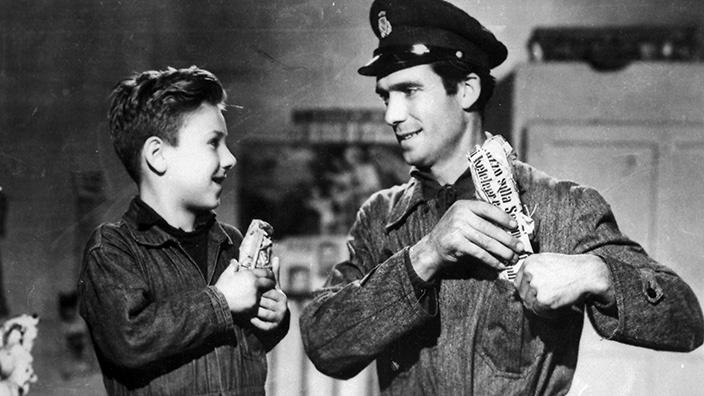
Bicycle Thieves (Vittorio De Sica, 1948)

Introduction
This journal will be mainly focusing on Italian Neorealism. This theory was founded by Cesare Zavattini in 1942, which suggested a new style of Italian Cinema that abolishes planned plots. This new form uses real people and locations so that direct contact is established with contemporary social reality, which was the life after Italy had surrendered to Germany during World War 2. To be more accurate, contemporary social reality unconditionally emphasizes on the ordinariness of daily lives.

Theory Discussion
Italian Neorealism was known as a cinema filled with poverty and pessimism. However, its decline began in the fifties as the nations were changing for the better and it was not economically profitable in Italy. The movie that will be discussed soon, Bicycle Thieves (1948), can be classified as Italian Neorealism due to fulfillment of the following traits : possesses melodramatic aspects, references to contemporary national experiences, used mixture of professional actors and non-actors, and mostly shot on-location, in the ruins of the post-war era.

Synopsis
Ricci Antonio, an unemployed man in the depressed post-World War 2 economy in Italy, was offered a job to hang up posters - for which he needed a bicycle (IMDb, n.d.). As his job required a bike, his wife then sold six of their bed sheets to redeem their bike at the pawn shop. On Ricci's first day of working, his bicycle was stolen as he was hanging up posters. Ricci, with his son's companion, had tried several attempts to trace back the bike by reporting to the police, seeking help from his friend Baiocco, approaching the old man who conversed with the thief. Despite located the thief, Ricci's accusation was of no use as he had no proof. He himself at last became a bicycle thief due to his keenness to retain his job. Unfortunately, he was caught by a group of man, right in front of his son.

Analysis

Bicycle Thieves (1948) had few scenes which consisted melodramatic aspects. According to Filmsite (n.d.), melodrama films are characterized by plot to appeal to the heightened emotions of the audience. The word "melodrama" consists of drama and melos-music, which means "play with music" (para.1). For example, Ricci frowned and looked around hopelessly as he failed to chase after the thief who stole his bike. This scene was accompanied with melancholy music to better enhance his state of mind - which is puzzled and depressed.
Besides, the other scene which possessed melodramatic aspect is when Bruno realized his father was cycling a stolen bike. This particular scene was very dramatic as Bruno facial expression showed how confused he was when he saw men were chasing after his father. His mixed feelings were accompanied by tense music as the group of men almost caught his father.

The second aspect of Italian Neorealism which was shown in the movie is references to contemporary national experience. According to History (n.d.), Gen. Dwight Eisenhower publicly announced the surrender of Italy to the allies (para.1). As the movie was filmed in year 1948 which was post-WWII, unemployment rate was high and citizens were eager to be hired. In order to complement the contemporary, the movie showed a large crowd of men gathering in front of an employment office in Valmelaina. This is why Ricci was delight yet upset at the same time when he got a job in the lackluster Italian economy (GradeSaver, n.d., para.1). Furthermore, the post-war contemporary was shown in the scene where many citizens lined up to pawn their belongings. People who used to live in comfort had no choice but to pawn things such as linen, binoculars and etc.

The used mixture of professional and non-professional actor was applied in this movie as well. According to Snider (2015), most of the casts were non-professional actors. The aesthetic of Italian Neorealism was to use non-actors or at least actors who are good in being natural. Director Vittorio De Sica had mentioned that it is difficult for a fully trained actor to forget his profession (para.3). Therefore, the only professional actor in the movie was the officer who announced employed workers in front of the employment office.


Furthermore, mostly of the scenes in Italian Neorealism were shot on-location, which were in the ruins of the post-war era. This aspect can relate the audience to the scenario of lives after war. In the movie, there are few scenes which can reflect this aspect. For example, there were many newly built apartments in the movie. When Ricci was offered a job, he went back to find his wife who was busy with her chores. The buildings were neat and clean, which reflects citizens who were rebuilding their nation after WWII. In addition, there was one scene where the old guy tried to run away from Ricci and Bruno on the bridge at the town. This scene showed the tranquility of Italy after they had surrendered to their allies in WWII. Citizens were able to mobile in town areas without restrictions and curfews as the nation was freed from war. Moreover, the other on-location shot is the cheers for "Forza Modena" team in the stadium. When Ricci was having his dilemma of whether to steal the bicycle or not, there were cheers from the stadium. It was not a planned event; instead, it was a real footage on the day of filming at the location. Citizens can enjoy watching matches in stadium which also proved peaceful lives after war.

Conclusion
Bicycle Thieves (1948) is a black and white film that showed the unfortunate life of an unemployed man. His persistence in searching for his stolen bike was a futile as no one believed in his accusation. This sorrowful film had a tragic ending where Ricci Antonio unable to get back his bike as well as showed Bruno his vulnerable side. The moral value behind Bicycle Thieves is that one can lose everything in his or her life except self-esteem.

Reference
1. Filmsite (n.d.). Melodrama films. Retrieved from
http://www.filmsite.org/melodramafilms.html

2. GradeSaver (n.d.). Bicycle Thieves Summary. Retrieved from
https://www.gradesaver.com/bicycle-thieves/study-guide/summary

3. History (n.d.). Italian surrender is announced. Retrieved from
https://www.history.com/this-day-in-history/italian-surrender-is-announced

4. IMDb (n.d.). Bicycle Thieves (1948): Plot. Retrieved from
https://www.imdb.com/title/tt0040522/plotsummary

5. Snider, E. D. (2015). 11 Heart-Stealing Facts About Bicycle Thieves. Retrieved from
http://mentalfloss.com/article/70637/11-heart-stealing-facts-about-bicycle-thieves

Monday, 9 July 2018

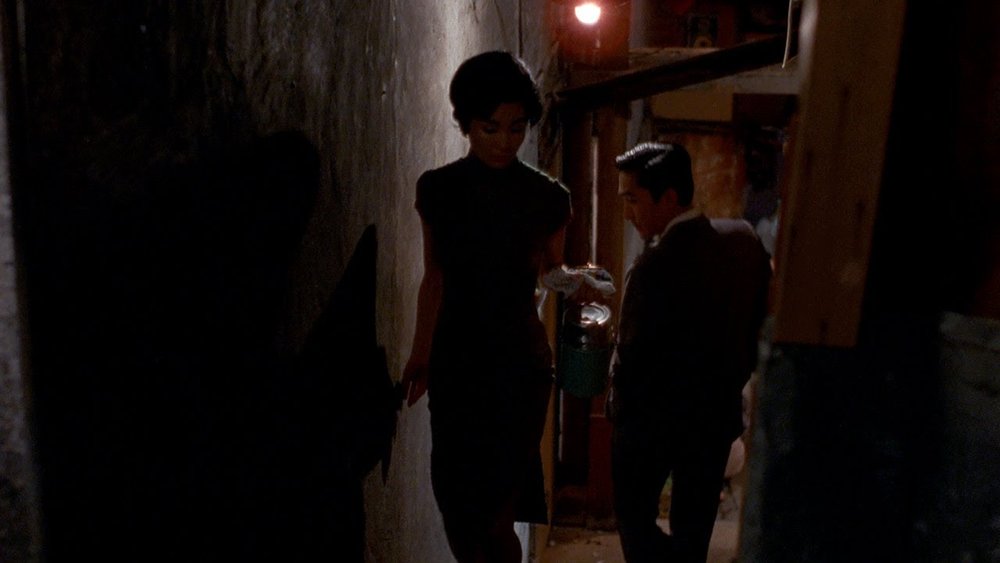
In The Mood For Love (Wong Kar-Wai, 2000)

Introduction
This journal will be mainly discussing about French Impressionist Cinema. It was popular from year 1919 to year 1928. The films produced usually exposed audience with in-depth psychological cognitive activities, which is very much different from 21st century's films. Majority of the modern films consist of hard-core action or hilarious elements which satisfied with vast audience's taste whereas French Impressionism was a generation where films explore the psychological causes of the narration. Therefore, its generation faded as it failed to retain the audience and the production costs rose.

Theory Discussion
French Impressionist Cinema concerns on mental states of the actors. It also visually depicts mental states through cinematography and editing, which is very much fitted in the film "In The Mood for Love" by Wong Kar-Wai. For example, the the rhythmic editing and POV editing are used to display characters' experience in particular situation. Cam movements is usually smooth, without steamy scenes that will create excitement. Visuals are usually filtered or vertiginous to show the dizziness or the emotions of the casts.

Synopsis
In The Mood For Love (2000) is a film which tells about two unfortunate individuals which are betrayed by their own spouses. Mrs Chan, who works as an executive assistant, and Mr Chow, who works as a newspaper reporter, are tenants who coincidentally rented rooms in apartments next to each other in the crowded Hong Kong of 1962 (Ebert, 2001, para.3). Since both the protagonists are always working til late night, their spouses seize the opportunity to have adultery affair behind them. After they had discovered such incident, they meet to practice and imagine how did their other half cheat on them. From the shared agony of adultery, Mrs Chan and Mr Chow have slowly developed a unique bond between themselves (Saleh, 2011, para.2). The film showed the dilemma of upholding their moral values and falling in love with each another.

Analysis
As mentioned earlier, this film is more focusing on the emotional and mental state of the casts, instead of showing them out directly. Follow by, there are some scenes which I personally find it interesting to analyze based on the theory of "French Impressionist Cinema".

First of all, throughout the film, audience could barely see the faces of the protagonists' spouses. It is either their backside or their shadows. This filming technique of Wong Kar-Wai's is a fantastic way in displaying the absence of the spouses in their lives. It is always bidding farewell and feeling lonely. For example, there was one scene when Mrs Chan was chit-chatting with Mr Chow's wife at the doorstep of her staying. Throughout the conversation, there was only Mrs Chan's face shown in the scene. Though Mrs Chan pretended to have no ideas about the adultery affair in front of Mr Chow's wife, but it is clear that her eyesight had overwhelmed with despair and grief.

Besides filming technique, the cam movement in the entire film is slow. Slow movement can best depict the emotional perspective of the characters. This is best shown when Mrs Chan was helping Mr Chow in his martial arts writing at his room. The cam movement is very slow and shows the inner feeling of both the protagonists. When Mr Chow is focusing on this pieces, Mrs Chan stared at him with a sweet smile on her cheek. This also shows that both the protagonists wish to freeze the time and remain at this very moment of happiness.

Mentioning about emotional aspect, rhythmic editing also plays an important role in this film. It is shown in multiple shots when Mrs Chan going up and down the stairs, back and forth the corridor. These scenes reflect the frantic thoughts of her inner struggles on whether she should or should not meet Mr Chow at his hostel room (Thinkinghut, 2016, para.12). Audience are brought into her state of mind whether she should be firm of her moral principle or summon her courage to meet her "Mr.Right". Rhythmic editing therefore indirectly triggered the audience's expectation.

Rhythmic editing appears not only for visual but also soundtracks. Yumeiji's Theme appeared eight times throughout the film, mostly accompanied with scenes which showed Mrs Chan's and Mr Chow's daily routine. Strolling down the street, walking down the stairs, having noodles at the stall and passing by each another are the things that happen over and over again. Both of them are looking fine on the outside but are swallowed by solitude day by day. This song contains sense of melancholy which shows the sorrow of the protagonists covertly.

Not only that, the costumes and the setting of the film disclose the psychological aspect of the characters too. Since the stereotypes and gossips are overwhelming around the neighborhoods, the characters choose to keep everything to themselves. For example, the clothing the protagonists wear are always tightening and suffocating, the hallway of the apartment is very narrow, and the facial expression of the protagonists are always moody. These elements metaphors the generation where people are narrow-minded, privacy are hard to be kept and gossips are here, there and everywhere. Therefore, when the landlady advised Mrs Chan not to go out too often and ought to retain her husband, she decided not to have frequent contact with Mr Chow to avoid from gossips.

Conclusion
In The Mood For Love is by far the most artistic romance film I had ever watched. It is very much different from modern film as you have to think and decode the meaning behind every scene. The path they chose are definitely not a perfect but a beautiful ending. The film very much reflects the reality where you have to sacrifice something, or even someone you love. It gets better every time you watch it!

Reference
1. Ebert, R. (2001). In The Mood For Love. Retrieved from:
https://www.rogerebert.com/reviews/in-the-mood-for-love-2001

2. Saleb, R. (2011). DFI Film Review. In The Mood For Love (2000). Retrieved from:
http://www.dohafilminstitute.com/blog/dfi-film-review-in-the-mood-for-love-2000

3. Thinkinghut (2016). In The Mood For Love: French Impressionism and Plot Analysis. Retrieved from:
https://thinkinghut.wordpress.com/2016/08/06/in-the-mood-for-love-french-expressionism-and-plot-analysis/

Monday, 2 July 2018

Paranorman (Sam Fell & Chris Butler, 2012)


Introduction
The main focus for this journal will be discussing about postmodernism. It promotes reflective stands on social, political and cultural agendas and resonances. Daniel Palmer (2014) once asked his students what postmodernism actually meant, and one of his students replied that "It is when you put everything in question mark"(para.1). In other words, postmodernism is about questioning the existing knowledge. People are often skeptical about the criteria we set for a particular structure and will somehow revise them. Therefore, in a postmodernist's viewpoint, there are no universal truths.

Theory Discussion
Postmodernism can be fall under two categories which are simulation and prefabrication. Simulation includes parody and pastiche whereas prefabrication includes intertextuality and bricolage. As mentioned earlier, postmodernism tends to blur the strict boundaries for structures; hence, the postmodernist component found in the film Paranorman is hybrid genre. According to Oxford Reference (n.d.), hybrid genre can be defined as the combination of two or more genres (para.1). For the film Paranorman, the genres that could be determined are horror and comedy. Therefore, Semantic/Syntactic Approach that is proposed by Rick Altman could no longer work in hybrid genre.

Synopsis
Paranorman is a stop-motion animated film which is directed by Sam Fell and Chris Butler. The story tells about a boy, Norman Babcock, who has the ability to visualize and communicate with the ceased souls. He was bullied due to his extraordinary ability by his peers. But somehow, there was a boy named Neil Downe who believed all Norman's doings. Norman was then forced by his uncle to inherit the obligation of protecting the town, by reading story to the witch every year. Norman eventually failed the task, enabling the awaken of the witch and the cursed dead. After understanding the witch's past, Norman insisted to persuade and rescue the witch. At last, the curse was broken and the witch as well as the cursed dead could finally rest in peace.

Analysis
As mentioned earlier, Paranorman can be classified as a horror-comedy genre hybrid film. Follow by, there are certain scenes' mise-en-scene and syntax which can prove so.

Norman's failure in reading the story at the exact location induced the arisen of the witch, Aggie, and the zombies. Based on this particular scene, this film can be classified as having horror element due to the appearance of the unnatural, which are the witch and the zombies. The syntax of horror could exactly be found when the zombies entered the town. The normalcy of town was disrupted by the advent of the cursed dead. There was an uproar in the town where the civilians attacked the zombies in order to protect themselves. In fact, the real threat was Aggie, the witch who wanted to avenge for herself. The dark clouds with demonic laughing faces could perfectly portray the visual perspective of a horror film.

Except for being an horror film, there are some laughable characters which can prove Paranorman as a comedy film. The best one would be the bully, Alvin. He was a good-for-nothing guy who did mischievous acts such as trying to impress a couple of girls, bullying Norman who always had conversation with the thin air, mocking Neil's appearance despite he himself being far from a beacon of physical health himself and etc. At first, he seemed to be a tough guy, but he turned to be a coward when facing with the apocalypse of the cursed dead. His dramatic personality had clearly displayed the visual perspective of comedy.

Besides, Courtney Babcock who treated her younger brother, Norman Babcock, poorly turned to be feminine and kind when confronting with Mitch Downe. Courtney was attracted by Mitch's physique when he appeared to be topless in front of the door. She acted to be weak and needy in front of  Mitch so that he could give her some affection. The contrast of Courtney treating Norman and Mitch had reflected the theme of exaggerated situation of comedy.

Paranorman could be considered as a postmodernist film due to some of its elements. The first element would be breaking the mindset towards the villains. The cursed dead were expected to be brain-eating and threatening zombies. In fact, they were afraid of the civilians and was longing for Norman's help to set them free. They were cursed by Aggie and could not proceed to the afterlife. Other than that, Mitch Downe's confession of his sexual orientation was the second element which represented postmodernism. As he was seemed to manly and muscular from beginning to end, it was a big plot twist for the audience when he mentioned "my boyfriend". This particular scene broke the traditional labeling of the connection between masculinity and heterosexuality.

Therefore, Semantic/Syntactic Approach could not work under postmodernist film. Under this approach, each genre has a set of distinctive criteria. Hybrid genre, which is one type of postmodernism, broke the structure of the respective genre and mixed them around to produce a new film. Hence, the genre's criteria were altered and opposed the Semantic/Syntactic Approach's manner of categorizing film. Film with mixing genres could no longer be classified with this method.

Conclusion
Paranorman is a film which consists of more than one genre. The characters have inimitable personality which made Paranorman a good film to be enjoyed. Postmodernist elements could be found throughout the film and most importantly, audience are taught not to judge a book by its cover. Man, woman and child ought to leave aside of their biases, step out of their comfort zone and expose themselves to new strange things.

Reference
1. Oxford Reference (n.d.). Retrieved from:
http://www.oxfordreference.com/view/10.1093/oi/authority.20111108103413377

2. Palmer, D. (2014). Explainer: what is postmodernism? Retrieved from:
https://theconversation.com/explainer-what-is-postmodernism-20791